Leadership Role
Initially, the concept of leadership within the counseling profession felt ambiguous to me. While I was familiar with more traditional forms of leadership, such as those found in athletics or conventional workplace settings that emphasize performance, direction, or authority, I struggled to understand how leadership manifested in a counseling role. Early in my coursework, I held the impression that leadership required something innovative or high-profile, such as conducting original research, developing new counseling interventions, or engaging in large-scale advocacy work. While these efforts certainly represent meaningful forms of leadership, I have since come to understand that leadership within counseling often emerges in quieter, more relational ways.
Early in my program, I became involved with Chi Sigma Iota (CSI) as a member. Although I did not hold a formal leadership position, observing my peers organize trainings and host events allowed me to see how leadership rooted in service and collaboration aligns with the values of the counseling profession. As a practicum student, I had the opportunity to co-lead and organize a group for resident assistants at OLLU. Taking responsibility for planning and facilitating group sessions helped me recognize that leadership can also involve offering structure, preparing thoughtfully, and supporting others’ growth. As I transitioned into internship, I continued to encounter similar opportunities by facilitating stress management groups and taking the lead in planning several sessions. Through these experiences, I began to see how organizing ideas, initiating plans, and following through could be expressions of leadership.
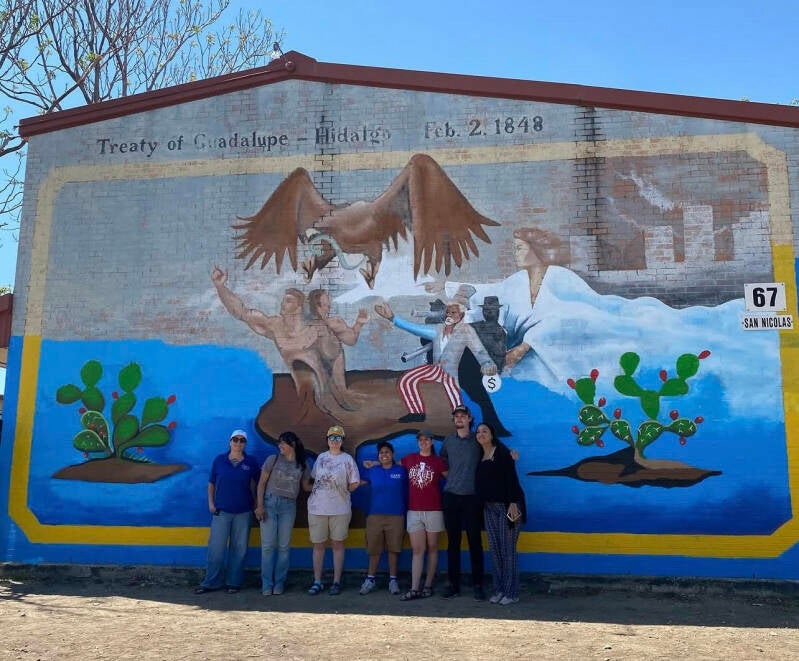
Beyond clinical settings, I was able to engage in leadership through volunteer efforts such as blood drives and dental days, where I assisted with creating materials, coordinating logistics, and supporting event operations. I found that contributing ideas and helping improve processes were valuable ways of leading without holding a formal title. Additionally, my involvement with OLLU’s community engagement initiatives, such as mural painting and restoration projects across the San Antonio community, reinforced my belief that leadership often occurs through action and consistency. I have come to understand leadership in counseling as a practice of service: stepping forward when needed, supporting colleagues, and remaining intentional about contributing to the well-being of both clients and the broader community. Leadership, in my experience, often shows up in small, intentional acts—stepping in without being asked, taking initiative to strengthen systems, and choosing to embody the change I hope to see.